


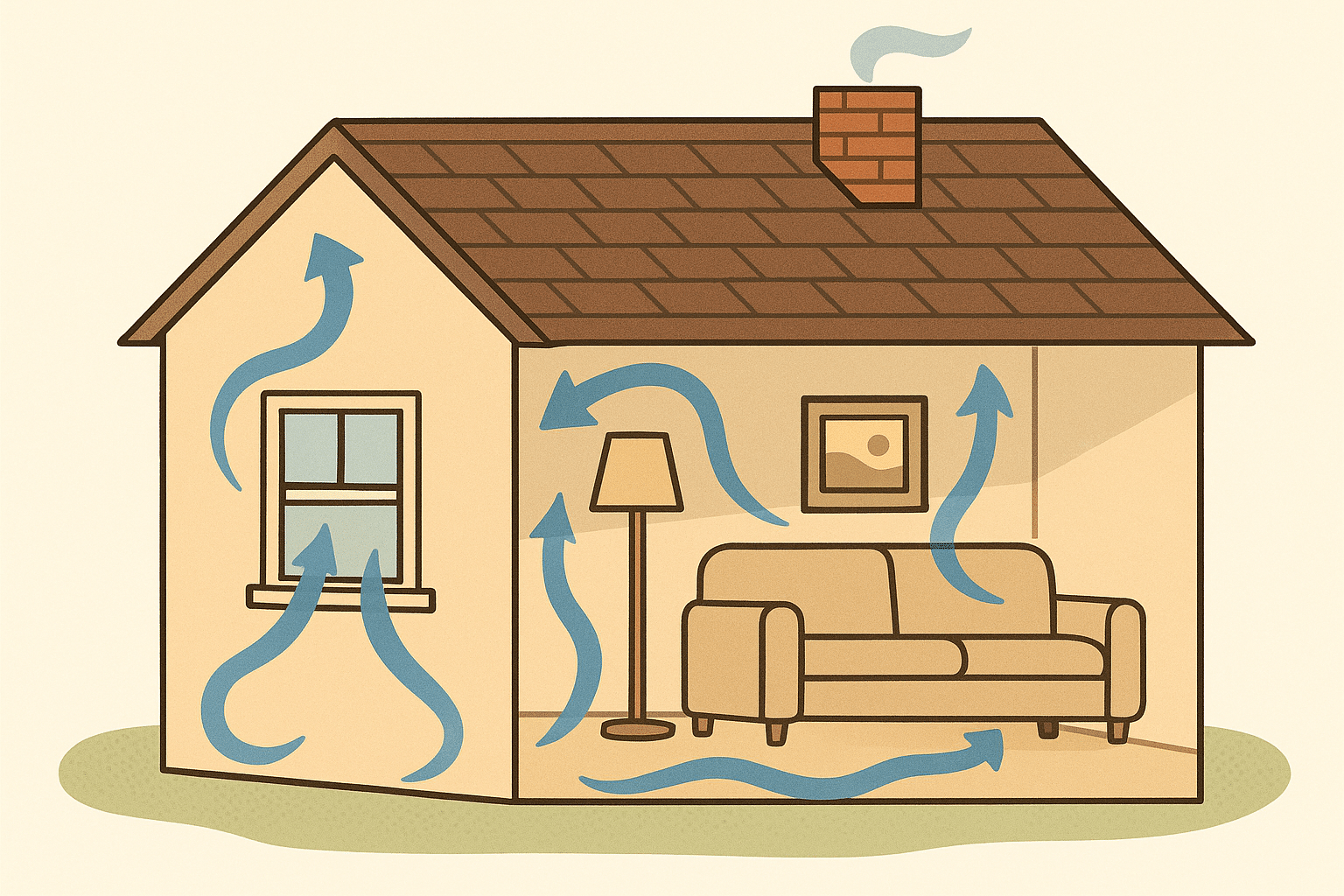
Is your Virginia Beach home struggling to keep up with the summer humidity?
Are your Dominion Energy bills consistently creeping higher?
If your attic has the standard R-19 or R-38 fiberglass batts that were common just a decade ago, your home is likely under-insulated for today’s efficiency standards and our demanding coastal climate.
In 2026, home insulation in Hampton Roads is no longer just about comfort; it’s a critical component of coastal home health and major financial planning, thanks to new Virginia regulations and powerful new incentive programs.
Why R-38 is Out (and R-60 is In) in Virginia Beach
The most critical update for Virginia Beach homeowners is the shift in building science and energy codes. For decades, R-38 was considered the target for high efficiency. But in 2026, in our hot and humid Zone 4/5 transition region, the new, recommended “comfort standard” for a vented attic is R-60.
This doesn’t mean R-38 is illegal in existing homes, but it means that the 10 to 12 inches of old fiberglass in your attic are now costing you significant money on your HVAC bills. True R-60, typically 18 to 20 inches of blown-in fiberglass, is required to properly isolate your cooled, dehumidified living space from the intense, damp heat of a Virginia Beach attic.
What is Blown-In Fiberglass Attic Insulation?
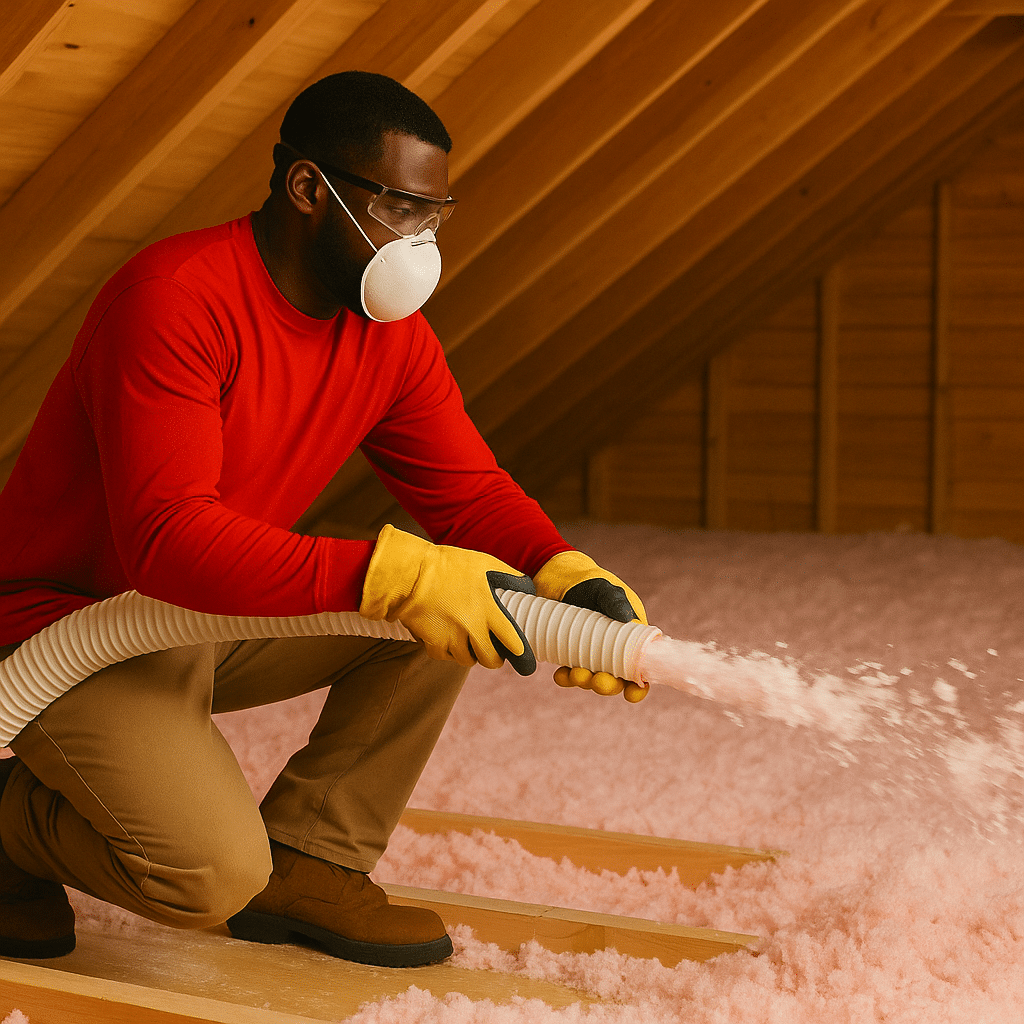
While traditional batts are cut into sections, blown-in (or loose-fill) fiberglass is installed using a pneumatic machine. This method is highly effective in attics because it creates a continuous, seamless blanket of insulation, eliminating gaps around tricky attic obstacles like joists, cross-bracing, wires, and pipes. It is a dense, high-performing solution that adapts to any shape or space in your attic.
Breaking Down 2026 Costs for Your Virginia Beach Attic
For most residential applications, we are focusing purely on the most economical and effective option: Blown-in Fiberglass.
The Cost to “Top-Off” (Adding R-60 on Top of Existing Insulation)
If your existing insulation is dry and in good condition (a simple R-30, for example) and you only need to blow an additional R-30 of fresh fiberglass over it:
- Price Range: $1.60 – $2.60 per square foot.
- Total Project: For a typical 1,200 sq. ft. attic footprint, this ranges from $1,920 to $3,120.
The Premium “PestGuard” Solution (Full Replacement and Specialty Armor)
The real challenge for many local homes is contamination. Whether it’s decades of dust, water damage from an old roof leak, or intrusion from our common local pests (raccoons, squirrels, and mice), insulation can often be compromised.
We highly recommend a complete replacement with a premium product, such as a specialty PestGuard fiberglass insulation. This product is blown-in loose-fill that is integrated with a specialized mineral (often orthoboric acid) during manufacturing. This additive makes the insulation inherently resistant to wood-destroying fungi and prevents insects (like silverfish, cockroaches, and earwigs) from nesting in the fibers. Note: PestGuard additives are harmless to mammals but devastating to invertebrate nervous systems.
Cost Breakdown for Contaminated Insulation Removal and PestGuard Install:
- Removal & HEPA Vacuuming: Properly removing old, compressed, and potentially biohazardous insulation must be done by trained professionals to ensure contaminants do not enter your living space. Cost: $1.50 – $2.50 per square foot.
- PestGuard Blown-In Fiberglass Installation (to R-60): Installing the specialty PestGuard product requires experienced technicians and specialized machinery. Cost: $3.00 – $4.50 per square foot.
- TOTAL INVESTMENT (Removal + PestGuard Install): Expect an all-in cost of $4.50 – $7.00 per square foot for a complete system replacement.
- Total Project Average: For a standard 1,200 sq. ft. attic, a total system upgrade will range from $5,400 to $8,400.
Unlocking the Savings: Stacking Your 2026 Credits
This is where the financial planning is critical. By upgrading your attic, you are likely eligible for significant financial offsets:
- Federal 25C Tax Credit: In 2026, homeowners can claim 30% of the cost of insulation and air sealing materials, up to a maximum credit of $1,200 annually.
- Virginia Home Efficiency Rebates (State): Under the expanded Virginia programs funded by the Inflation Reduction Act, eligible households can qualify for direct rebates of up to $1,600 for insulation and air sealing measures based on energy savings.
- Dominion Energy Incentives: Our local provider often offers specific, varying rebates for comprehensive home efficiency upgrades, which may include R-60 insulation when paired with proper air sealing.
Conclusion
A high-performance R-60 attic, installed correctly with seamless, blown-in fiberglass, is a powerful tool in your fight against humidity and rising energy costs in Virginia Beach. While the upfront investment of $5,000–$8,000 for a PestGuard replacement system may feel daunting, the combination of code-mandated comfort, energy savings, and potentially over $2,800 in combined credits and rebates makes this one of the smartest investments you can make for your home’s value and your daily comfort.

FAQ: Insulation in Virginia Beach
1. Is fiberglass insulation still effective in our humid climate?
Yes. Modern blown-in fiberglass is a synthetic material that does not naturally absorb moisture, meaning it will not rot, mildew, or break down simply because the air is humid. It only fails if there is a bulk water leak (from the roof). When properly paired with essential attic ventilation (soffit and ridge vents) that remove that humidity, it remains the standard of efficiency for vented coastal attics.
2. I have R-30 batts in my attic now. Do I really need to get to R-60?
The new R-60 standard is about performance. In Virginia, R-30 often only stops about 90–93% of the heat transfer. Moving to R-60 will stop 96–97%. While that 4% difference seems small, it actually means your HVAC system needs to run significantly less to maintain a comfortable temperature on a 95°F day with 80% humidity, leading to substantial financial savings over time.
3. What happens to my old insulation during the removal process?
Professionals use powerful industrial vacuum systems with HEPA filtration. We place the large-diameter vacuum hoses into your attic (often through the gable or soffit, to minimize indoor mess) and suction the old, contaminated insulation directly into a self-contained dumpster parked outside. This keeps dust, mold spores, and rodent debris out of your air quality.
4. Will I still qualify for incentives if my household income is high?
Most homeowners qualify for the Federal 25C Tax Credit (up to $1,200), regardless of income. The Virginia State IRA Rebates (up to $1,600) are typically tiered based on income, but there are pathways based on projected energy savings (the “measured savings” method) that allow higher-income households to still receive substantial rebates.
5. How long will the insulation project take?
For a standard 1,200 sq. ft. attic in Virginia Beach, a simple blown-in “top-off” usually takes one day, often just a morning. If the project requires full removal, disinfection, and then the installation of PestGuard R-60, it will typically be a structured two-day project: Day 1 is dedicated to a clean removal, and Day 2 focuses on air sealing and the new installation.


